Pleached trees are one of the most elegant and practical ways to add structure, privacy, and year-round beauty to a UK garden. Whether you're creating a formal avenue, screening a boundary, or adding architectural interest to a contemporary outdoor space, this guide covers everything you need to know — from choosing the right species to planting, care, and seasonal maintenance.
What Are Pleached Trees?
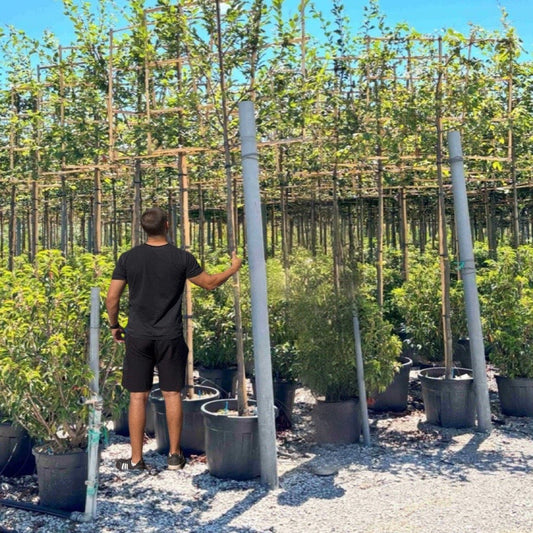
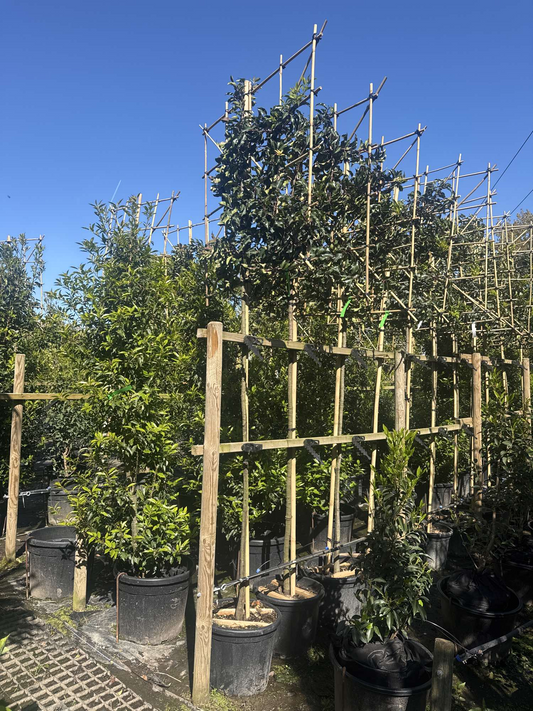
Pleached trees are trained so that their branches are woven together horizontally on a clear stem, creating a flat, layered canopy on top of a bare trunk. The result is a living screen or 'hedge on stilts' — providing privacy at height while keeping the space below open and light.
The technique has been used in formal European gardens for centuries and has seen a huge resurgence in popularity in UK gardens, where space is often at a premium and privacy is a priority.
Benefits of Pleached Trees
- Privacy without bulk – A pleached screen provides privacy at exactly the height you need it, without the ground-level bulk of a traditional hedge
- Year-round structure – Evergreen varieties like Portuguese Laurel and Novita Laurel provide screening 365 days a year
- Architectural impact – Few garden features make as strong a visual statement as a row of well-trained pleached trees
- Wildlife value – Deciduous varieties like Hornbeam support insects, birds, and other wildlife
- Low maintenance once established – An annual prune is all most pleached trees need to maintain their shape
Choosing the Right Pleached Tree for Your Garden
Hornbeam (Carpinus betulus)
The most popular pleached tree for UK gardens. Hornbeam is a native deciduous species that holds its russet-brown leaves through winter, providing year-round interest even when not in full leaf. It's fast-growing, tolerates most soils including heavy clay, and is extremely hardy. Ideal for formal avenues and boundary screens.
- Type: Deciduous (holds leaves in winter)
- Growth rate: Fast (30–60cm per year)
- Best for: Formal screens, avenues, exposed sites
- Spacing: 1.5–2m apart
Portuguese Laurel (Prunus lusitanica)
The go-to evergreen pleached tree for year-round privacy. Portuguese Laurel has glossy dark green leaves, fragrant white flowers in early summer, and small red berries in autumn. It's more elegant than Cherry Laurel and tolerates shade, pollution, and most soil types. A superb choice for urban gardens.
- Type: Evergreen
- Growth rate: Moderate (20–40cm per year)
- Best for: Year-round privacy, urban gardens, shaded sites
- Spacing: 1.5–2m apart
Novita Laurel (Prunus laurocerasus 'Novita')
A compact, upright variety of Cherry Laurel with large, glossy leaves and a dense, bushy habit. Novita is one of the best evergreen pleached trees for creating a thick, impenetrable screen quickly. It's extremely hardy and tolerates deep shade — perfect for north-facing boundaries.
- Type: Evergreen
- Growth rate: Fast
- Best for: Dense screens, shaded or north-facing sites, quick results
- Spacing: 1.5–2m apart
Sweetgum (Liquidambar styraciflua)
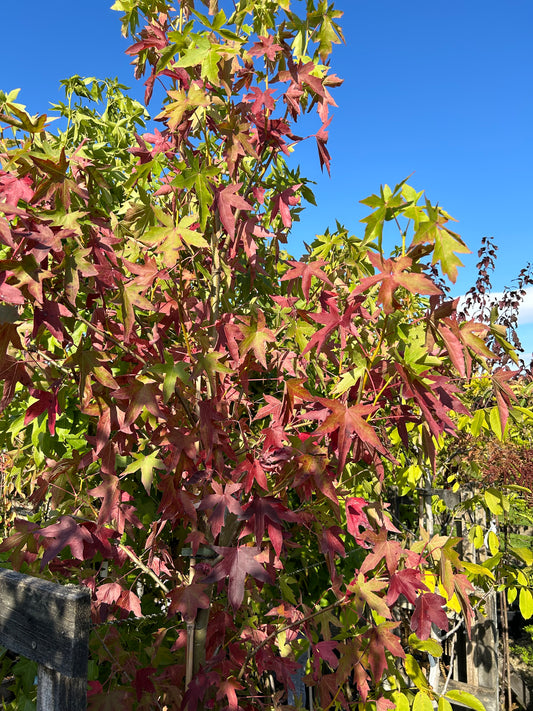
If you want a pleached tree that earns its place in every season, Sweetgum is hard to beat. Its star-shaped leaves turn spectacular shades of red, orange, and purple in autumn — one of the finest autumn colour displays of any UK garden tree. It prefers moist, slightly acidic soils and a sunny position.
- Type: Deciduous
- Growth rate: Moderate
- Best for: Autumn colour, moist soils, statement planting
- Spacing: 2–2.5m apart
Red Robin (Photinia × fraseri)
Famous for its vivid red new growth in spring, Red Robin is an evergreen pleached tree that provides year-round colour as well as privacy. The red flush appears with each new flush of growth throughout the growing season, making it one of the most eye-catching options available. It prefers a sheltered, sunny position.
- Type: Evergreen
- Growth rate: Moderate to fast
- Best for: Year-round colour, sunny sheltered sites, contemporary gardens
- Spacing: 1.5–2m apart
When to Plant Pleached Trees in the UK
Pleached trees can be planted at almost any time of year, but the two best windows are:
- Spring (March–May) – Soil is warming up, rainfall is plentiful, and trees have the whole growing season ahead to establish. Ideal for container-grown trees.
- Autumn (October–November) – Soil is still warm from summer, and winter rainfall does much of the watering work for you. Particularly good for bare-root trees.
Avoid planting during summer drought or hard winter frosts. If you receive your trees during an unsuitable period, heel them into a sheltered spot until conditions improve.
How to Plant Pleached Trees
- Mark out your spacing – Use canes to mark the position of each tree before you start digging. Step back and check the layout from different angles.
- Prepare the soil – Dig a hole twice the width of the root ball and the same depth. Incorporate well-rotted compost to improve drainage and fertility.
- Plant at the right depth – The root collar (where the roots meet the trunk) should sit at soil level. Planting too deep is one of the most common causes of tree failure.
- Backfill and firm – Return the soil, firm gently with your foot to remove air pockets, and water thoroughly.
- Stake and mulch – Use a low stake to support the trunk and apply a 5–7cm layer of bark mulch around the base, keeping it clear of the trunk.
Ongoing Care and Maintenance
Watering
Water newly planted trees deeply 2–3 times per week during dry spells in the first growing season. Established trees are largely self-sufficient but benefit from watering during prolonged drought.
Feeding
Apply a balanced slow-release fertiliser in spring (April–May). Liquid feeds high in potassium from June onwards will support healthy summer growth.
Pruning
Most pleached trees need one main prune per year, ideally in late summer (August) once the main flush of growth has slowed. Remove shoots growing out of the flat plane of the tree and tie in any new lateral growth to your support framework. A light tidy in spring removes any winter damage.
Support
Check ties and support wires annually. Loosen any ties that have become tight as stems thicken, and replace any that have deteriorated.
Frequently Asked Questions
How tall do pleached trees grow?
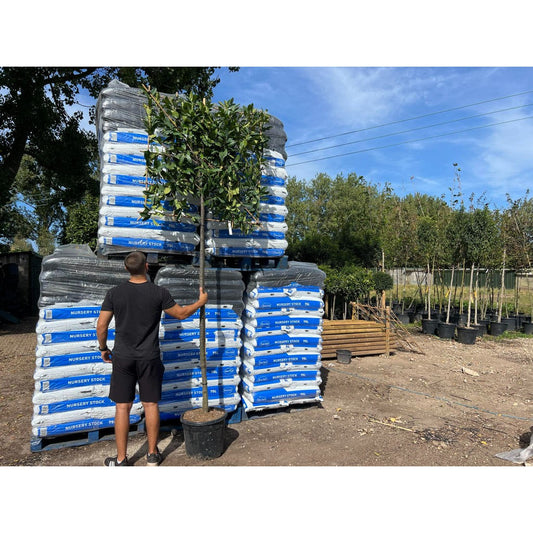
Most pleached trees are supplied with a clear stem of 1.5–2m, with the pleached canopy starting above that. The canopy itself is typically 1–1.5m tall, giving an overall height of 2.5–3.5m. With annual pruning, they can be maintained at a consistent height indefinitely.
Do pleached trees need planning permission?
In most cases, no. Pleached trees are not subject to the same height restrictions as fences and walls. However, if you live in a conservation area or your property has a Tree Preservation Order (TPO), you should check with your local planning authority before planting or pruning. See our separate guide on planning permission for pleached trees for more detail.
How long does it take for pleached trees to establish?
Most pleached trees are well established within 2–3 years of planting. During this period, regular watering and feeding will make a significant difference to the speed of establishment.
Can pleached trees be grown in pots?
Yes, though they will grow more slowly and require more frequent watering and feeding. Use a large container (minimum 60–70cm diameter) with good drainage and a loam-based compost such as John Innes No. 3.
Shop Our Full Range
Ready to transform your garden with pleached trees? Browse our full collection: